Quick Answers: Money in Morocco (2026)
- Official Currency: The Moroccan Dirham (MAD). It is a closed currency, meaning you cannot legally buy or sell it outside of Morocco.
- Best Currency to Bring: US Dollars (USD), Euros (EUR), and British Pounds (GBP) are the easiest to exchange everywhere.
- Exchange Rate Hack: 10 MAD is roughly equal to 1 USD or 1 EUR. Use this "1 to 10" rule for quick mental math in the souks.
- Cards vs. Cash: Visa and Mastercard are accepted in modern hotels, but cash is absolutely required for the Medinas, street food, and taxis.
- Hidden Fees: Always choose to pay in the local currency (MAD) on card terminals to avoid the Dynamic Currency Conversion (DCC) scam.
I magine this: you step out of the plane in Casablanca. The air smells of the Atlantic salt, spices, and something elusively oriental. But as soon as you approach your first city taxi driver , the magic collides with reality. You need money in Morocco . Not just numbers on a smartphone screen or Apple Pay, but crisp bills that smell like history. Welcome to the world of the Moroccan Dirham—one of the most stable and conservative currencies in Africa in 2026.
After 20 years of working in Moroccan tourism, I have learned one thing: in this country, money is not just a means of payment; it is a tool for communication. In this article, I will guide you through all the financial labyrinths of the Kingdom: from the Moroccan Dirham exchange rate to the subtle art of "baksheesh" (tipping) in Marrakech's Jemaa el-Fnaa square.
Morocco Exchange Rates 2026: Stability as a Religion
Let's start with the dry but crucial numbers. In 2026, the currency of Morocco continues to please travelers with its predictability. Unlike many neighboring countries, Morocco does not experience hyperinflation. The Dirham (MAD) is strictly pegged to a basket of currencies, primarily the Euro (60%) and the US Dollar (40%).
Current approximate exchange rates:
- 1 EUR ≈ 10.81 MAD
- 1 USD ≈ 9.14 MAD
- 1 GBP ≈ 12.65 MAD
For convenience, always use the "one to ten" mental math rule. See a price tag of 100 Dirhams? That’s roughly 10 Euros or 10 Dollars. This simple arithmetic will save your brain from overheating while haggling in the local markets .
Dollars, Euros, or Pounds: What to Bring?
This is the question I get asked daily on WhatsApp. The answer is simple: bring crisp, new US Dollars, Euros, or British Pounds . Morocco is historically and economically tied to Europe and global trade. These currencies are recognized, loved, and can be exchanged at any booth labeled "Bureau de Change" at the airport terminals or in the city centers.
If you are flying from the US, UK, or Australia, bring cash from home. Do not try to bring exotic or lesser-known currencies, as converting them into Dirhams will be nearly impossible and the rates will be terrible. Also, ensure your bills are relatively new and untorn; older USD bills (pre-2006) are often rejected by exchange offices.
Why "I Have No Change" is a National Philosophy
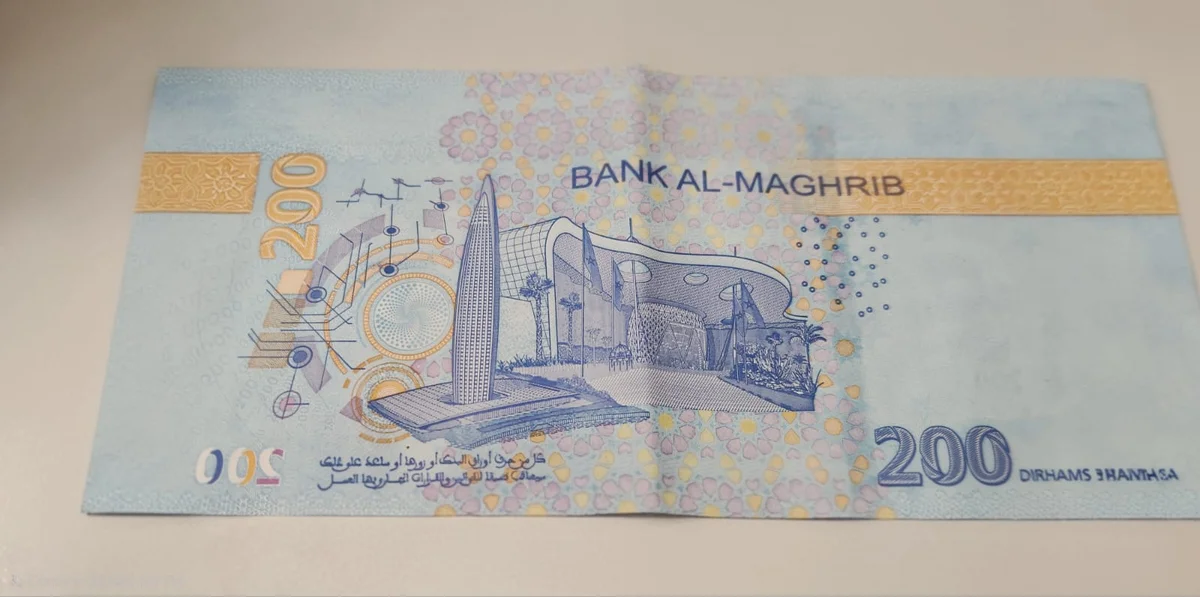
Let's move on to the most important practical advice. In Morocco, you must always—and I mean always —carry small change. The large 200 and 100 Dirham bills are your worst enemies in everyday street life.
Picture this scenario: you stop by a street vendor to buy a glass of freshly squeezed orange juice for 10 Dirhams. You hand him a 200 Dirham bill. At this moment, time stops. The vendor begins a long search through his pockets, runs to his neighbor's stall, and eventually returns with a sad face: "No change, my friend. Buy 19 more glasses of juice."
The same story applies to monkey handlers, snake charmers, or street musicians. If you take a picture with a monkey on your shoulder, the owner will expect his 10 or 20 Dirhams. If you only have large bills in your wallet, that photo will cost you 100 Dirhams, simply because "I have no change" acts like a magic spell.
Bank Cards in Morocco 2026: Visa, Mastercard, and Travel Cards
The situation with credit and debit cards in 2026 is twofold. In major cities like Casablanca, Rabat, or Agadir, Visa and Mastercard are widely accepted in chain hotels, Carrefour supermarkets, and high-end boutiques. (Note: American Express is rarely accepted). However, as soon as you step into the Medina (the old city), card terminals disappear like mirages in the Sahara.
Important Warning: Do not rely exclusively on Apple Pay, Google Wallet, or contactless travel cards like Monzo or Revolut. While great for ATMs, you need physical cash to survive the local markets.
Tipping in Morocco: "Baksheesh" as the Art of Hospitality
In Morocco, tipping is not a strict obligation, but it acts as social glue. It is a way of saying "I like you, thank you for your work." The average salary of a waiter or parking attendant is very low, so your coins truly make a difference.
- Restaurants: 5-10% of the bill (if a service charge is not already included).
- Street Parking Attendants: 5-10 Dirhams for keeping an eye on your car.
- Hotel Porters: 10-20 Dirhams per bag.
- Tour Guides/Drivers: Highly individual, but 50-100 Dirhams for a great half-day experience is a sign of good manners.
Prices in Morocco 2026: How Much to Budget?
Morocco remains affordable, but prices in 2026 have adjusted slightly to global trends. Here is an estimated daily budget per person (excluding hotel):
- Budget / Backpacker: €20-€30 or $25-$35 (street food, public trams, free beaches).
- Comfort / Mid-range: €60-€100 or $65-$110 (good restaurants, petit taxis, museum entrance fees).
- Luxury / VIP: €250+ or $270+ (fine dining, private expert guides, Mercedes VIP transfers).
Summary for the 2026 Traveler
1. Bring fresh, untorn EUR, USD, or GBP cash.
2. Exchange money at official banks or Airport "Bureau de Change" (never with street hustlers!).
3. Hoard small coins (1, 5, 10 Dirhams) like precious treasure.
4. Don't be afraid to haggle—in Morocco, it's not about greed, it's about respecting the cultural process.
Want to travel without worrying about cash and scams?
We organize your Moroccan journey from A to Z: from premium airport transfers to the best authentic restaurants where you won't get ripped off. With Guid-Marokko, you will always feel like an honored guest, not a walking wallet.
Message Us on WhatsApp